The Real Story of TEMS (Tactical EMS) and Out of Hospital Care in Pittsburgh
Table of Contents
Content Warnings#
- This post will contain spoilers for major plot lines of both season 1 and season 2 of The Pitt
- This post will discuss mass shootings and links may contain graphic depictions of these events
The Season 2 Episode 7 Teaser#
When HBO posted the teaser for the seventh episode of season two, there was one shot that seemed to have everyone talking, the return of Dr. Abbot.
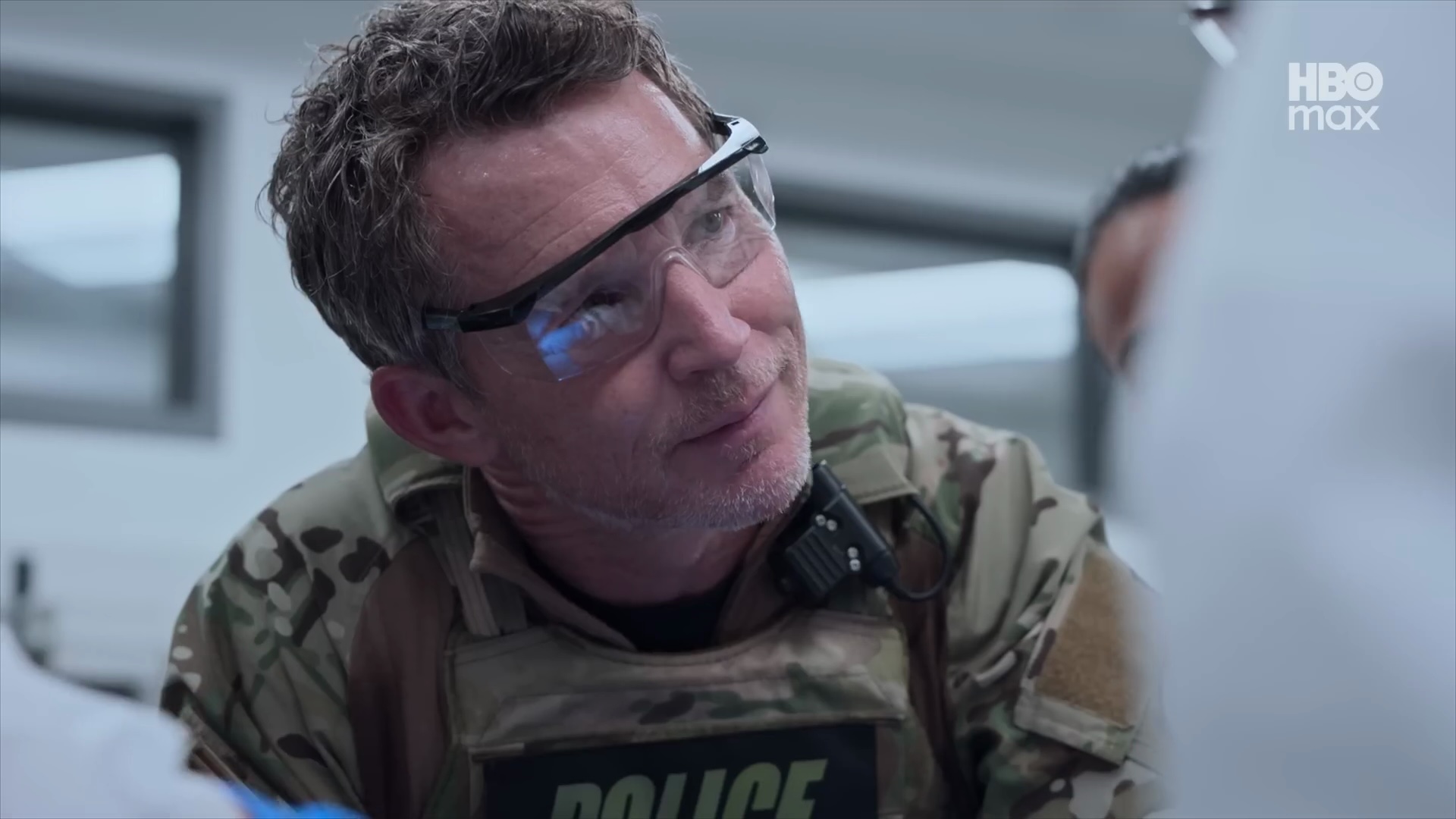
Dr. Abbot in his police uniform tending to an injured SWAT officer
Still from The Pitt Season 2 | Episode 7 Preview (HBO Max, 2026)
We have a scene of Dr. Abbot working on a patient wearing fatigues with “Police” on the front. While many were happy to see a favorite character return, many were also unhappy to see him dressed in a police uniform. I’ll be discussing the accuracy of this scene, but also diving deeper into the state of the tactical emergency medical services (TEMS) and out of hospital care in Pittsburgh and how it is represented in The Pitt. This mostly will be discussed in regards to the PittFest shooting from season 1.
What is TEMS?#
The History of TEMS#
Tactical Emergency Medical Services, or TEMS has been around since the late 1980’s or early 1990’s depending on when you consider it to have started. An article from the National Tactical Officers Association describes some of the beginnings from one officer involved with early TEMS protocols.
The general idea is that military units have learned how to handle large number of traumas in the field, and some of those practices can be brought into civilian scenarios where similar numbers and types of traumas can occur, such as mass shooting events.
Tactical Combat Casualty Care (TCCC or T-triple-C), which is a US military standard, started around the same time as the early TEMS units in civilian life. Now, organizations like the National Association of Emergency Medical Technicians offer varying courses depending on the level of care expected by the provider.
TEMS is constantly evolving as more articles are written about its successes and failures. Sadly most of these are written in blood as the result of tragic events.
TEMS vs EMS#
One example of how TEMS differs from typical EMS is the evaluation protocols. If you have taken a CPR course, you have at least heard of the the “ABCs”, of Airway, Breathing, Circulation. On the other hand, TEMS uses the MARCH protocol used by TCCC which adds several different checks. It now follows, Massive hemorrhage, Airway, Respirations, Circulation/C-spine, and Head injury/Hypothermia. Massive hemorrhage is added first, because a body without any blood can not be saved by rescue breathing or CPR. Stopping the bleed is critical until the patient can reach a hospital. Similarly, hypothermia is now a worry, because massive blood loss can cause critical drops in body temperature.
The other major difference is in the environments that TEMS providers are trained to operate in. Typical EMS or firefighter units must wait for scenes to be cleared by the police before they can enter and provide care. In scenarios when minutes or even seconds matter, this delay in care can drastically reduce the odds of survival. TEMS members are trained to go into hazardous environments, provide medical care, extract patients, and provide sustaining care until reaching a hospital.
Composition of TEMS Teams#
TEMS teams are generally either, a) law enforcement personnel (typically members of a SWAT team) who cross-train as medics or b) EMTs, paramedics, nurses, or doctors who cross train with SWAT. In either case, the goal is to have a team member who can both provide medical assistance and be part of the tactical team.
Law enforcement personnel are by their very nature going to be armed, but what about civilians (EMS providers)? There are many articles and discussions about arming TEMS personnel. So, would Dr. Abbot be armed as part of the Pittsburgh TEMS team? Let’s look deeper into the EMS and TEMS in Pittsburgh to answer that question.
Pittsburgh Emergency Medical Services#
Dating back to the Freedom House Ambulance Service, which we learned about in season 1, Pittsburgh has a very robust out of hospital care system compared to other places I have lived. If you are interested in learning more about Freedom House, I would look to the WQED YouTube video on the topic.
While there are other interesting units like the motorcycle and bicycle medics for special events, a dedicated river rescue unit, and the heavy rescue units for a wide range of complex rescue scenarios. I’m going to focus on two others in regards to The Pitt. These are the EMS Physicians and TEMS units.
Pittsburgh EMS Physicians#
In some scenarios, getting people to care quickly is impractical. It could be because they are in a distant part of the city, or on a hiking trail without good vehicle access. Or it could be due to a multi-casualty event where triage is necessary and ambulance supply is short. In any case, Pittsburgh helps to fill this gap by having a 24/7 response team of ER physicians with specially equipped vehicles.
The UPMC EMS Physicians work closely with the county dispatch to be assigned to high priority calls, or those with extenuating circumstances requiring a higher level of care than what can typically be provided in the field. With both their added knowledge and additional medications and equipment, they are able to help some patients reach the hospital that otherwise may not.
Even though this unit is not a very high call unit it can provide care to the most critical patients at their time of need.
Pittsburgh Tactical EMS#
The Pittsburgh Tactical EMS Team has about 20 total members, with several physicians, several EMS supervisors, and the majority being paramedics. This YouTube video details a little more of the training, which includes hundreds of hours of continuing education yearly and firearms qualifications. They support not only Pittsburgh SWAT, but Allegheny County and FBI SWAT teams as well.
We have already learned that TEMS teams can be different, but in the case of Pittsburgh, they are armed units comprised of civilian medical providers. This perfectly aligns with Dr. Abbot’s role and how he is depicted on the scene.
The one aspect that doesn’t match though would be his uniform. Since he is not a police officer, and the TEMS unit works with many organization, their front instead shows “TEMS”, not “POLICE”. In an article from the Pittsburgh Post-Gazette, this can be seen in the below image.
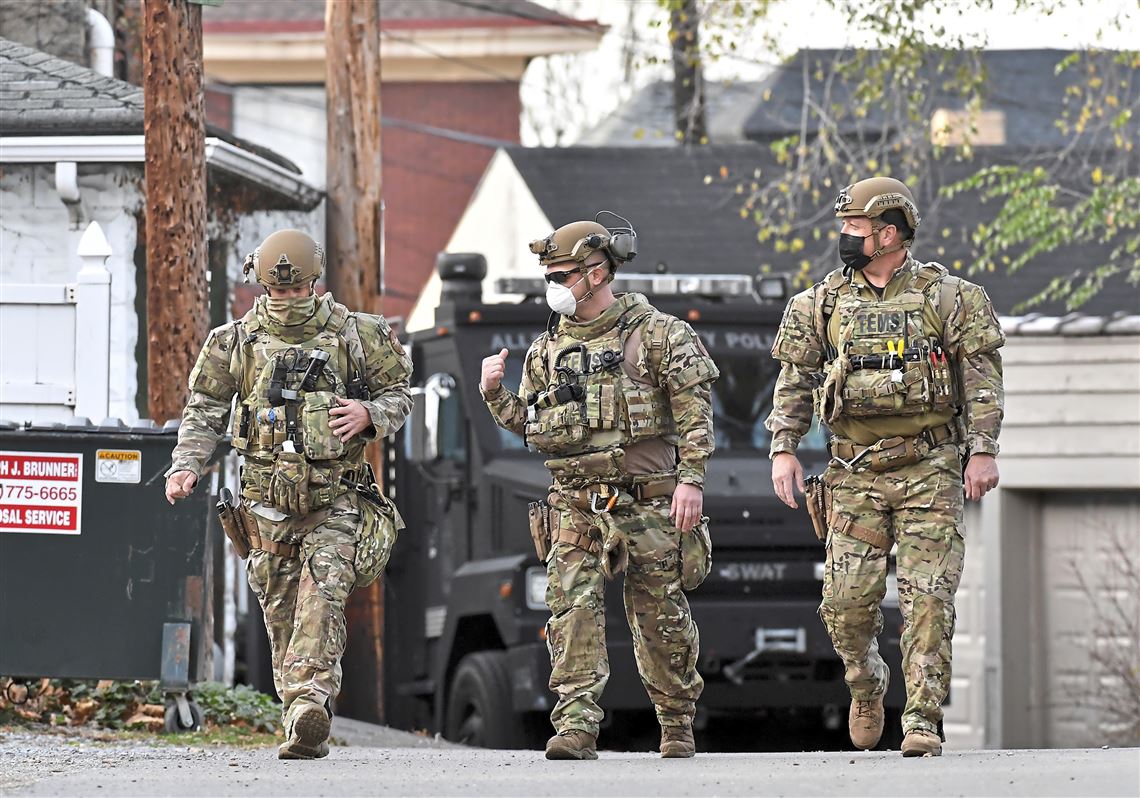
Three Pittsburgh TEMS Members in Uniform
Still image from Pittsburgh Post-Gazette article (Matt Freed/Post-Gazette, 2020)
Pittsburgh EMS and TEMS in a Real World Mass Shooting#
In season two, we meet Yana, a Jewish patient who was a member of the Tree of Life Congregation. Unfortunately, this was a real event that happened on October 27, 2018 and resulted in the deaths of eleven people, with six more wounded. This made it the deadliest attack on a Jewish community in American history.
Whenever tragic events like this happen in the US, there is analysis performed to determine what could have been done differently. This helps educate teams, like Pittsburgh TEMS to hopefully have better outcomes in the future. In this case, I’ll be looking at two sources. First, Dr. Keith Murray, who responded as a TEMS physician to the Tree of Life, had a podcast interview where he discussed in detail responding to the event. There is also two after action reports he wrote or co-wrote, describing factually what happened, as well as analysis of what did and did not go well. These provide a deeper insight into the inner workings of the Pittsburgh TEMS team.
While this deep dive won’t teach us more about Dr. Abbot in season 2, I do want to address what the emergency response would have looked like during the PittFest shooting in season 1.
Dr. Keith Murray Podcast Episode#
One of the members of the Pittsburgh TEMS team that arrived at the scene was Dr. Keith Murray, who is an ER physician at UMPC Mercy and the medical director of Pittsburgh SWAT. In an episode on the Explore the Space podcast, he goes into details about many aspects of being on TEMS and specifically the events that happened on that day. Below are some of the most important points for my general discussion, but I would highly recommend the entire podcast as he is very well spoken.
What Does SWAT Medical Director Do?#
The roll of Dr. Murray as the SWAT medical director is rather varied. While the most obvious role that has come out of the Tree of Life is going on actual missions, he holds several other roles. He first assesses the overall health of the team to ensure they are fit for duty. Dr. Murray is also part of planning, both for training scenarios, and missions. As part of planning missions, he determines what threats they may have and plans for medical ingress and egress by ground and by air. Overall, he is in charge of anything that could impact the health of the team.
Equipment in the Field#
Dr. Murray goes into detail about what equipment he carries with him into the field. It is mostly broken down into layers, with the base layer being a uniform and his sidearm. His second layer is the ballistic protection (eg: armor) and on that he has basic medical kits for TCCC and running MARCH protocols. This is standard no matter the call-out.
From there though, it can vary greatly depending on the scenario. In the case of the Tree of Life, he had two additional packs; one MCI bag, and his more general medical bag. The MCI bag is loaded with about 40 tourniquets and 50 hemostatic gauze packs. His standard bag is equipped with items for needle decompressions, surgical airways, and chest seals, but notes that this is about the limit of care he provides in the field. Since the goal is stabilization to get patients to an ER, more care can actually cause higher mortality rates by delaying transport.
Training#
Twice a year the whole SWAT team does 8 hours of training and they are trained to do the same things that Dr. Murray and assessments. For example should be able to evaluate and triage patients, notice massive arterial bleed and apply tourniquet. He noted that what they saw at the Tree of Life generally matched what they have “seen” in training.
Tree of Life#
The largest part of the podcast was dedicated to Dr. Murray speaking about the Tree of Life shooting. While he doesn’t go into details because the FBI didn’t want those disclosed, he was able to talk about the day in broader strokes and relate them to general TEMS and SWAT information.
The first thing that Dr. Murray spoke about is that he receives pages for all the call-outs, but only responds to about 20% of them. This is because many of them are not good candidates for his presence. For example, SWAT being called out to a barricaded suspect that won’t come out is likely going to not require TEMS support with a single suspect in an enclosed location.
On the day that he received the message about the Tree of Life, he knew it was different and quickly got in his truck and started heading to the scene. While it is a 16 minute drive, he made it in 11 or 12 minutes, in a personal vehicle without lights or sirens. As a side note, I think I saw his vehicle that day, as there was a truck with its hazard lights on racing towards the synagogue behind a police car, but I can’t confirm that. In any case, he knew the dire situation and quickly got to the scene.
A common theme throughout his conversation is that his primary goal is to stop the active shooter. Medical care is a secondary concern and can only be done when an area is at least partially safe, and he has someone able to provide cover. The focus change to patent care leaves a TEMS member very vulnerable, but it can be done while waiting to advance further into the structure.
In total, they had about 12 TEMS members on two different entry teams. As rooms were cleared they were able to pause and evacuate several people to safety. Some were thankfully unhurt and were just in hiding, while others did need medical care.
Dr. Murray stated that tragic part of this shooting, but more generally, is in recent mass shooting events, many wounds caused by AR-15 style rifles are not survivable. Many of the evaluations performed that day just confirmed that there was nothing that could have been done, not matter how fast the TEMS team had been able to respond.
With the suspect barricaded, they successfully cleared the rest of the building and all civilians were evacuated. It was at this point that the final confrontation occurred which resulted in several injuries. One officer was shot multiple times, but started receiving care in under a minute from the TEMS team. Due to the extent of the injuries and the scene being contained, Dr. Murray made the decision to ride with this officer to the hospital to provide a higher level of care during transport. Two key items here are the quick intervention and the ability to stay with patents until arriving at the ED.
Another SWAT officer, and the shooter were also both shot, but didn’t receive immediate care from TEMS due to the rapidly evolving situation. Both were evaluated on site and moved to the ED shortly after TEMS evaluation.
The last thing was the debrief that happened the next day. Dr. Murray praised the post-incident care for the team It was a two hour debrief with therapy dogs, psychiatrists, and had everyone talking together. They even had armed guards at the door to ensure not interrupted.
After Action Report#
While Dr. Keith Murray’s podcast goes into a lot of the details from his perspective, the After Action Report he wrote has a more clinical analysis of how Pittsburgh handles a mass shooting event. Another similar report was written by a group of doctors including Dr. Murray. Since both reports have some unique information I’d recommend looking at both if you are interested. Also, even the same information is presented differently may be easier for you to read.
Timeline#
One key part of the report is the more detailed timeline of how long it took for events to unfold. It really shows how rapidly resources can be deployed.
- T+0 minutes - Calls to Allegheny county 911 reporting active shooter
- T+2 minutes - EMS declares a county-wide mass casualty incident (MCI)
- T+3 minutes - SWAT and TEMS alerted
- T+5 minutes - Two adult level 1 traumas activate MCI protocol (although this was not done via the formal process for unknown reasons)
- T+7 minutes - Medic command setup on scene
- T+? minutes - Exact time unknown, but entry is performed and gunfire exchanged around here
- T+11 minutes - 5 ambulances already on scene
- T+12 minutes - First patient removed via ambulance to ER
- T+13 minutes - TEMS units begin arriving
- T+17 minutes - 3 more ambulances on scene
- T+20 minutes - First rescue team stages outside
- T+30 minutes - Additional teams of SWAT with imbedded TEMS form and prepare for entry
The most important thing to realize is that Allegheny county 911 operations quickly activates the required resources, and they move very expeditiously to the scene. In under 15 minutes patients were already being transported via ambulance, TEMS members were already arriving, and medic command had already been established with over a half-dozen ambulances on scene.
The Size of the Response#
Breaking down how many units the MCI shows the overwhelming set of units that are immediately called out for such an event (not counting TEMS):
- 5 Pittsburgh paramedic units
- 2 Pittsburgh EMT units
- 1 district chief
- 2 rescue trucks (each staffed with 2-3 paramedics/chiefs)
- 1 Pittsburgh mass casualty unit (MCU) (equipped with equipment of 10 ALS ambulances)
- 1 EMS Physician
- 5 county ambulances
- 1 county supervisor
This means that there are at least 14 paramedics, 14 EMTs, 2 chiefs/supervisors, an EMS physician, 12 transport vehicles, and equipment to handle dozens of additional injured individuals. These numbers are just the initial call-out from the city and county declaring the MCI, with more being deployed from further out as needed.
Response Time to Patients#
Breaking down the patents into different categories, we can evaluate how the response was handled by TEMS. In total there were eight patients during the shotting.
Two patents, one police officer and one SWAT officer, had non life-threatening injuries and received non-emergency transport.
One police officer was wounded outside the synagogue, and was transported by EMS before TEMS arrived since he was able to self-evacuate to a safe location.
Two civilians were reached by TEMS in around 40 minutes from the initial 911 calls, and arrived at the ED 13 and 29 minutes after TEMS contact. While this seems like a long time, we must also compare this to the overall timeline. It would have been almost another hour until the shooter surrendered and another thirty minutes beyond that until the building was deemed safe by SWAT command. Without TEMS it could have been a lot longer for them to receive care, or be evacuated from the structure.
As noted in the podcast, there was one SWAT officer gravely wounded. Because TEMS was embedded the officer received care in under a minute, and was in the ED in under 20 minutes from being wounded. Additionally, he had Dr. Murray providing care for that entire time, giving additional support not available without TEMS.
Lastly, there were two patents, one SWAT officer and the shooter, who suffered injuries but did not get immediate TEMS support. In the case of the shooter, he was not evaluated until he surrendered. The SWAT officer on the other hand was separated from TEMS and pinned down. Even with TEMS in the area, there may be times that they are unable to help.
Emergency Department Staffing#
The second report has a few things I actually wanted to call out about staffing.
UPMC Presbyterian, the closest level 1 trauma, had only 10 patients at the time, which was called out as atypically low. What stood out to me more is that it was staffed with two attending physicians, four residents, and had a trauma bay staffed with one trauma attending surgeon, and four surgical residents.
Second, even with some confusion with the situation being described as a active shooter at the hospital, there were still over 100 additional care providers that arrived within 45 minutes to the emergency department. They also did note that all of the additional people showing up was actually a problem, and they have now updated their MCI protocol to have a separate volunteer area so the ED is not overwhelmed.
So, while a single attending at a level 1 trauma like is shown in The Pitt may be out of the ordinary, there are times that even a level 1 trauma center which sees 5000+ trauma activations a year is sometimes staffed with just two attending ED physicians.
Relating Everything Back to The Pitt#
Dr. Abbot as a SWAT Doctor#
At the end of the day, the representation of Dr. Abbot is very accurate to how a doctor could be embedded in a Pittsburgh SWAT team. He could go out on high risk calls, performing the exact type of procedure of securing a surgical airway in the field. Dr. Abbot would likely have traveled with the patent as depicted in the show and given the critical condition, if the situation allowed. While many had an issue with it, he would be armed with a pistol, and wear tactical gear in this role.
The only issue I have with the representation is he would not have had “Police” on his uniform, since he is not a police officer. He should have had “TEMS” on the front.
Overall, I would say his depiction as a doctor on the Pittsburgh TEMS team earns a solid A, only hampered by the minor inaccuracy in the “Police” uniform badging.
Handling of a Mass Shooting#
With all of this new information about how TEMS acts in an actual mass shooting in Pittsburgh, we can go back and reevaluate how accurate The Pitt was with its portrayal the PittFest shooting in season 1. While many have stated that The Pitt did a good job of showing how the ED would handle the situation, I think that the presentation of patients arriving was not very accurate. Overall, I’d give it a D rating.
First, I’d like to start with the good. We do see some patients arriving by police or civilian vehicles, which does happen in these events. Additionally we do see patients arriving at about 1/2 way into the episode via Pittsburgh ambulances, which does align with when the earliest patients arrived from the Tree of Life in around 20-30 minutes.
From here though, I see a wide variety of issues that I’ll just quickly go through:
- No ambulances except for Pittsburgh, even though the MCI response includes units from the entire county
- The lack of tourniquets or hemostatic dressings for patients, especially later in the response doesn’t match TEMS responding with large amounts of these supplies
- No TEMS members arrive with critical patients, again especially later in the response once the scene has been secured
- The officer who was shot could have been treated with a surgical airway on-site since there would have been a medical staging area with a (non-TEMS) EMS physician even if they were not near TEMS members
- No “extra” equipment arriving in ambulances or other vehicles from patients stabilized by the MCU truck’s extra supplies
At the end of the day, I didn’t see any indication of TEMS or the large and advanced care that responds to an MCI in Pittsburgh, leading to an poor accuracy rating.
Conclusions#
Overall, I hope this deep dive is interesting to someone. I think having Dr. Abbot bring light to TEMS is a great introduction to the second season, but also highlights what was missing from the first season. You easily could have had Dr. Abbot see a TEMS member in the first season, and then decide to join, brining it full circle. Instead The Pitt did miss the wonderful out of hospital care, that the TEMS team, EMS physicians, and all the other specialty teams provide. But maybe we will see some of them in season three!